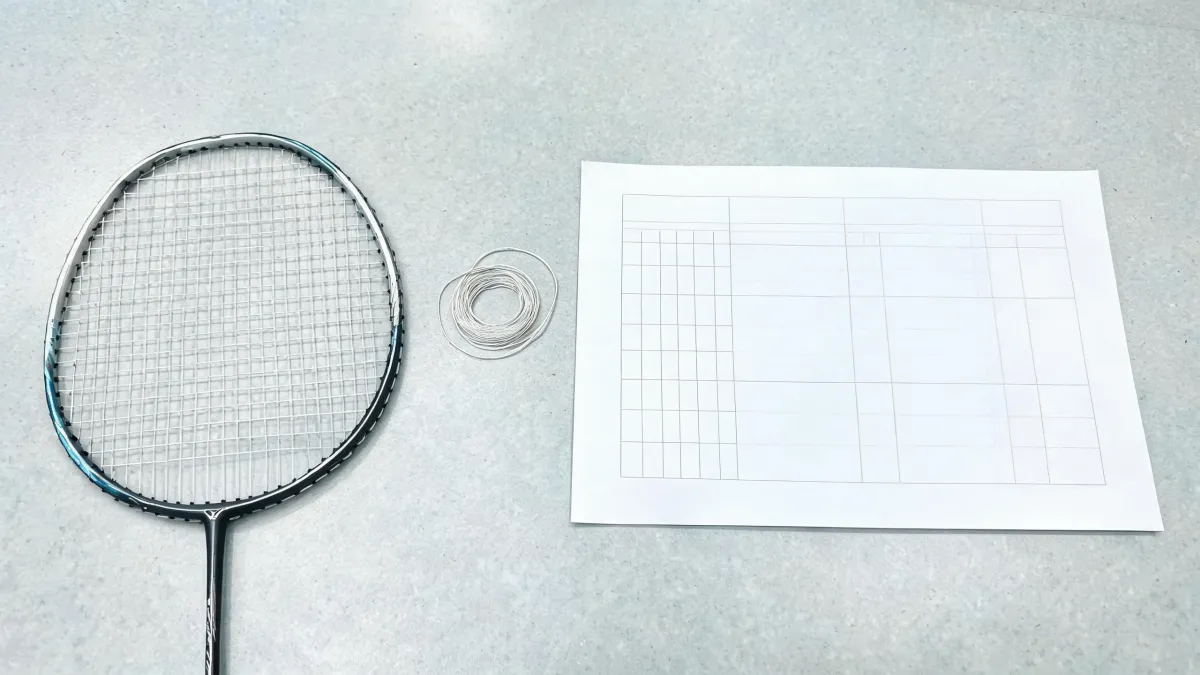
The crate is open, the sample is out of the bag, and someone has already photographed the paint, tapped the frame, taken a handful of easy swings, and signed the sheet. The bill arrives later: a second inspection trip nobody budgeted, replacement samples flown in, a launch date that slides, and a damaged frame that could still reach a player.
The reference here is YONEX ASTROX 88 D GAME 3AX88D-G and its manufacturer's pre-use guidance. That guidance is not a spec for a custom frame; it names the conditions worth checking before a racket is hit. Sign the condition record before the first hit, because once the sample has been played you cannot separate what arrived from what the hitting did.
What a Rubber-Stamped Sample Really Costs
A sample that passes on looks does not stay a sample. It becomes the reference — the physical object the factory matches against when the run starts, and the object your own team holds up when the second shipment looks different. Because nobody examined the shaft, the frame or the grommets before signing, any irregularity that came in with that first crate is now baked into the reference, and every unit after it gets measured against a flawed standard.
That failure mode is quiet. Nothing breaks on the review table. A grommet already worn from a test stringing job keeps notching the string at the frame edge, a frame that took a knock in transit keeps its hairline, and the first real evidence arrives with a customer. Which means the correction path is the expensive one: stock already packed goes back through inspection, replacement samples ship on your freight account, and a launch date moves while a signature is re-earned.
Consider a hypothetical. A US brand approves a custom racket sample in early autumn on paint and a short hit, and the run ships in winter. In spring, frames come back from a club with strings breaking near the top of the hoop. Nobody can say whether the fault was in the sample, the run or the stringing, because the sample file holds photographs and a feeling, and the argument with the supplier then turns on memory instead of paper.
Yonex's pre-use guidance for the 3AX88D-G states that use of a damaged racquet can result in injury, and that sentence moves the whole issue out of the cosmetic column. A frame that reaches a player is a liability question, and liability questions are answered with records rather than recollections.
Three Checkpoints in the Yonex 3AX88D-G Guidance
The guidance opens with the check that matters most: before using the racket, make sure there are no cracks or any other irregularities on the shaft, frame and grip. Two things are worth pulling out of that sentence. The first is the list itself — shaft, frame, grip — short, physical, and silent about paint, decals and packaging. The second is the word irregularities, which is broader than cracks on purpose: a dent, a warp, a raised seam at a joint all qualify as things that should not be there.
Grip wear gets its own entry, and the wording shows it is not a comfort issue. Wear includes the grip becoming slippery or the grip material being rubbed away, and a worn grip can cause the racquet to fly out of the hand and injure the player or someone else on court. The mechanism is friction loss: the hand's hold on the handle depends on the surface, so once that surface is polished or missing, the force keeping the frame attached to the player disappears at the exact moment it is needed, mid-swing.
Grommets are the third entry and the one most buyers skip. Worn grommets can damage strings and let them break easily. The reason is mechanical rather than mysterious: the grommet is the buffer between string and frame, so when it wears through, the string sits against a hard edge and gets cut there under tension — which is why string failures cluster at the frame instead of the middle of the bed.
None of this is a specification. It is one manufacturer's pre-use guidance for one named model, on one page, in the version on file. Use it as a set of inspection categories, not as tolerances, pass or fail thresholds, or evidence that any custom factory can meet them.
Turning Those Checks into an Incoming Record
An incoming condition record needs four blocks, and each block has to close on a written result, because a block that ends on a verbal looks fine cannot be compared against the next sample.
Block one is identity: sample ID, the design reference it was built to, arrival date, and photographs of the sealed carton before it is opened. The carton photos exist for a single purpose — establishing that what you inspected is what arrived, and that nothing was crushed and re-taped in transit.
Block two is structure: shaft and frame examined for cracks or other irregularities, recorded per item rather than as one line for the whole racket. Splitting them matters because a clean shaft says nothing about the frame, and a single combined verdict throws away the detail you will want when sample two lands next to sample one.
Block three covers the interfaces: grip surface condition and grommet condition, logged on their own lines rather than folded into finish. A slippery or rubbed grip goes here, and so does a worn or missing grommet. Keeping them separate stops a cosmetic pass from quietly carrying an interface fault through the door with it.
Block four is disposition: pass, hold, or request a re-sample, with the printed name of whoever signed and the date. Which means every record ends in a decision someone owns, and a hold stops being an awkward outcome and becomes a normal one. The record documents condition; it is not a strength test, not a durability test, not a certification, and it should never be described as any of those on a scorecard or in a launch deck.
Ranking Failures That Stop the Shipment
Two faults land on the same sheet and only one of them should stop the shipment, so the ranking has to come from what each part actually does.
Shaft and frame cracks or irregularities rank first, because the shaft and frame carry the load of every swing and nothing downstream fixes them. No re-string, no re-grip, no touch-up addresses a hairline in the hoop. A sample with an irregularity there is a hold, and the conversation moves to how it got there.
Grommets rank second, and the reason is that a grommet fault is correctable before the racket reaches a player. Worn grommets damage strings and let them break easily, so the failure they cause is a string failure, and string failure is a fix-and-recheck item: replace the set, restring, look again. Grip wear ranks third because the grip is a consumable the end user replaces as routine — a slippery or rubbed grip on a sample is a note, unless the wear suggests the sample was hit before it reached you, at which point the note becomes a question about what else was done to it. It comes down to one test: can the fault be corrected before the racket reaches a player?
Imagine a short review window where only one item survives the cut: keep the shaft-and-frame examination and the grommet check, and drop the extra round of cosmetic photographs. Photographs reconcile a delivery against a design file; they do not carry a judgement about structure, and treating them as if they did is how a cosmetic pass gets mistaken for a condition pass. That preference flips in one situation: when the cosmetic standard is the commercial dispute itself — a colour or decal mismatch you intend to reject the shipment over — the photographs become the evidence and the condition lines drop to a secondary record.
Three Sign-Off Paths for a Sample Crate
Three ways of signing off a custom racket sample are realistically on the table, and they differ mainly in what they leave behind.
The first is the cosmetic sign-off: photographs of paint, decals and packaging, a comparison against the design file, a signature. It is fast, it fits into a single meeting, and it captures finish. What it does not capture is anything about the state of the shaft, the frame, the grip or the grommets, so a sample approved this way has no condition baseline at all.
The second is the hit-first sign-off. The sample is strung, played, and the verdict comes from feel — balance, swing weight, how the shuttle leaves the bed. It is the most persuasive review and the most enjoyable one, and it records how the sample plays. It records nothing about what arrived, and it puts the hitter in the position the 3AX88D-G guidance warns about, swinging a racket whose shaft, frame and grip were never examined. If something goes wrong afterwards, the file cannot separate a factory fault from a transit fault from a hitting fault.
The third is the condition record before the hit: the three reference checkpoints logged first, then the sample strung and played, then the disposition signed. It captures state and feel both, and it costs more handling time per sample because inspection and hitting cannot be collapsed into one pass. Presented that way, the choice stops being about which path feels thorough and becomes about which path produces a document that survives the next crate.
What to Recommend and What to Rule Out
Specify the pre-hit condition record, and the reason is comparability. A record taken before the first swing gives you a baseline you can hold against sample two, sample three and the first production units, and it is the only one of the three paths that does.
The cosmetic path is excluded as a stand-alone sign-off because a finish photograph cannot show a shaft or frame irregularity and cannot show grommet wear. The camera records what a surface looks like, and the checkpoints in question are not surface features. The hit-first path is excluded for a different reason: it tells you how the sample plays, which is genuinely worth knowing, but nothing about whether the sample arrived sound — and it consumes the evidence by loading a frame nobody inspected.
One more exclusion carries as much weight. Do not let the finished record be read as proof of strength, durability or compliance. No independent testing, batch data or certification exists behind this material, and no such claim belongs on a form that documents arrival condition.
Everything the record cannot answer should leave the building as written questions to the supplier: the current quotation for the specified build, the minimum order quantity, the stated lead time, monthly capacity, what customisation the factory will actually accept on shaft, frame and grip, and whether their own sample report exists and what it covers. Those are questions rather than conclusions, and they belong in the same file as the condition record so the next reviewer sees both halves.
Where the 3AX88D-G Reference Stops
The checkpoints transfer as categories of inspection and nothing more. They come from one manufacturer's pre-use guidance for a named model on a captured page, so they say what to look at, not what number counts as a pass. No tolerance, no deflection limit, no acceptable crack length, no grommet wear threshold is established here, and inventing one in a receiving form would be worse than leaving the field blank.
There is a second limit that is easier to miss. A condition record captures what a trained eye can see on the outside of the frame, and an internal fault — a void in the layup, a poor cure at a joint — does not announce itself at the receiving table. Which means the record lowers the chance of shipping a visibly damaged frame without eliminating the chance of shipping a weak one. The answer to that gap is a written question to the supplier about their own inspection and sample reporting, not a stronger sentence on your form.
Back at the same crate, the sheet now looks different. Three lines are filled — shaft and frame, grip, grommets — the disposition is signed and dated, and the one frame with an irregularity in the hoop goes back into the bag as a hold instead of into the production run. That costs extra handling time per sample, and it will occasionally hold a sample a quick hit would have waved through. What the time buys is a baseline that outlives the crate and makes the second delivery reviewable at all.
